This is what happens when you develop delusions of adequacy
The rabbit holes aren’t real, but keep digging as if they were
The truth, the whole truth and nothing but the truth, allegedly
In the spirit of William Safire’s commentaries on grammar
Great quotes that didn’t seem to fit in any metaphorical category

My writing career began in 1957 at age 4, assisted by my cats. Actually I’m just playing with a Royal portable typewriter, which my mother used in 1931 when she attended USC as an English major. The typewriter has since been refurbished and now serves as a conversation piece, if anyone still enjoys the art of conversation. By the way, cats will critique your work in a quiet and professional manner, unlike some editors I have known, and they don’t care what you write if you feed them on time.
About Me (I’ll be here all week)
Winston Churchill said, “History will be kind to me, for I intend to write it.”
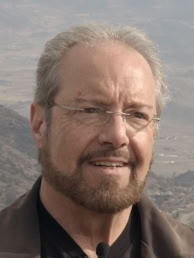
Here’s my version of a one-sided bio. I will fit all my years into 600 words, which I can do in full honesty if I leave out the part about interviewing Bigfoot. My father named me Pierre after his best friend, Pierre Grimaud, but my mother wrote Peter on the birth certificate. Still, dad always called me Pierre, so I used to tell everyone that’s my real name. Eventually I learned it was an unwritten law in Bakersfield, where I grew up, that a name like Pierre would raise doubts about my patriotism, so I encouraged friends to call me Pete.
As the youngest of four children I was an unplanned arrival. My brother, Paul, was my nearest sibling, being four years older; he and my two older sisters, Kitty and Margaret, were riding bicycles while I was still a toddler. But I wasn’t lonely because my siblings always looked after me and my parents wisely taught me to read at an early age, so I grew up happily independent and curious about the world.
From my affable mother’s Irish roots I inherited the joy of story telling and the desire to travel; from my father’s über-rational intellect I embraced scientific curiosity. I blame my parents for a lifelong addiction to reading and the fact that, by age 10, I concluded I should explore the world on my own as soon as possible. Indeed, right after high school, having saved some money as a boxboy for Safeway, I traveled from Bakersfield to Bavaria, bumming around central Europe alone, mistakenly thinking I could endure awkward moments by speaking B-plus German. In the ensuing five decades I explored all kinds of jobs and avocations, depending on what was interesting, challenging or simply available. I have been a newspaper reporter, editor, multimedia developer, DJ, business consultant, dancer, cowboy, science historian, wildlife videographer and next, maybe I’ll try out as a rodeo clown.
My first career passion was in print journalism, where I spent 20 years as a writer, editor, graphic designer and tech guy. Then I made a radical switch as a consultant for California’s Fiscal Crisis and Management Assistance Team, and then, six years producing interactive media, videos and websites for a county office of education. Next, eight years directing the workplace training and business development programs at the Weill Institute. Then I tried to retire but failed miserably.
During my alleged retirement I started a business doing organizational consulting and training in effective communication skills - in other words, just the opposite of what you hear on any TV news shouting match. I’ve also taught organizational leadership at Fresno Pacific University and for five years I did training for Apple.
I have a Bachelor’s degree in Organizational Behavior and Master’s degree in Education. More recently I earned a Master’s in the Philosophy and History of Science at the University of Bristol in England. This will help me complete a science history documentary about quantum physics.
My daughter, Suze, is a high school math teacher and a dance choreographer in Bakersfield, and my son, Michael, is a network technology consultant in Indiana. Ever since my wife died 10 years ago, I’ve stayed active with a wildlife filming hobby. I do presentations on the elk that roam throughout the Tehachapi Mountains, where I live today. Some of my work is displayed at elkmovies.com.
Finally, as with all autobiographies, I’ve left out a lot of details. I’d love to add more, but hey, I’m at 599 words now.
- Peter DeArmond, aka Pierre LaFou
I Blame My Parents for My Addiction
I am ashamed to admit that when I was young I developed a bad habit, one that grew into a terrible addiction. It is a rare condition, seldom seen these days, but I must confess my affliction and confirm the rumors about me.
I am a reader. I can’t break this addiction, and I blame my parents for it.
On Memorial Day I silently honor them by remembering and blaming them for encouraging me to be curious about this world. If you were one of those kids who kept asking “why is the sky blue,” and you had parents who took you to a strange place called a library to find out on your own, then you know what I mean. They could have given the answer, but they wanted me to get addicted to the joy of learning for myself. This is what every good educator and every good parent does.
Rest in peace, mom and dad. The child you raised is addicted for life.
Comprehension in A Minor
In the early 1800s, there was a wealthy Russian ambassador to Vienna who loved classical music. His name was Andreas Razumovsky, and he offered Beethoven a nice sum of money to write string quartets for him. Beethoven accepted the money and wrote what today are known as, naturally, the Razumovsky Quartets.
It turned out these quartets were so fast and difficult that it was hard to find musicians who could play them. Listen to Quartet No. 3 and you’ll hear what I mean. Razumovsky reportedly was not very happy; the listening public didn’t like how the quartets deviated from the established norm and expectations of chamber music. Of course Beethoven didn’t care what anyone thought.
But there was one interesting review published in 1807 that stated, "Three new, very long and difficult Beethoven string quartets … are attracting the attention of all connoisseurs. The conception is profound and the construction excellent, but they are not easily comprehended.” Nicht leicht zu begreifen — not easily comprehended.
Remembering this story helped me make a decision. For a few months I had been thinking about applying to enroll in a Master’s program in the Philosophy and History of Science at the University of Bristol. Some of the coursework seemed like it would be an excellent way to help me do research for a documentary project I had already started. But I was 70; I would stand out as an old and awkward American at an English university where the smart students were 50 years younger. Worse, I would be trying to understand some new ideas and concepts about which I knew nothing.
So of course I applied and, to my frightful surprise, was accepted. I resolved to be the awkward old American who would ask any so-called dumb question. To my surprise my professors — and my younger classmates — genuinely appreciated this approach.
The whole experience was wonderful for me. My take-away is this: Whenever we encounter something completely new and different, we try to understand it by comparing it to something that we’re familiar with, or already know. We reason by analogy, and if the new thing doesn’t fit with what we think we know, we feel cognitive dissonance. Some things — maybe like a crazy new string quartet that doesn’t fit with your expectations — seem too hard to accept. That’s normal. But thanks to my experience at Bristol, I say embrace that cognitive dissonance. There’s no such thing as a dumb question, so question everything. Someday, you might even like the new music.
Essays from my time at the University of Bristol
Here is a list of some of the essays (titles only) I wrote during my studies at Bristol. If you would like to have a PDF copy of any of these, just send your request to: pierre@zanythoughts.com
From Twig to New Branch: Quantum Emergence in the Big Tree
Ahead of His Time: Revisiting Boltzmann’s Weltanschauung
Unscrambling the Omelette: A Pragmatic Guide to Quantum Bayesianism
An Ontological Dissection of the Fine Structure Constant
Max Planck’s Philosophy of Science: An Early Model for Naturalized Metaphysics